


Florida Special Assessments Explained: What Buyers and Realtors Must Ask Before the Contract
Blog post description.
12/31/20253 min read

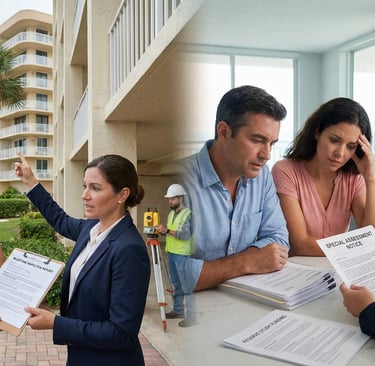
Florida Special Assessments Explained: What Buyers and Realtors Must Ask Before the Contract
In Florida, one of the fastest ways for a deal to go sideways is when a buyer discovers a special assessment too late. It can turn a “comfortable” monthly payment into something completely different—and it can impact loan approval, buyer confidence, and resale value.
At Rey New Homes, I guide buyers through new homes in Orlando and Miami, and one thing I’m strict about is this:
If there’s an HOA or condo association, we do the homework early. No surprises..
1) What is a special assessment (in plain English)?
A special assessment is an extra charge the HOA/condo association collects from owners—on top of regular monthly dues—to pay for a major expense such as:
roof replacement
structural repairs
elevator upgrades
concrete restoration
major insurance shortfalls
reserve funding gaps
storm-related repairs not fully covered
It can be:
a one-time lump sum, or
spread out as a monthly payment for a set period
Rey tip: A “low HOA fee” can be a red flag if reserves are weak. Low dues don’t always mean low costs.
2) Why special assessments are happening more often in Florida
Most special assessments come down to one of these:
big repairs that were postponed too long
insufficient reserves (the association didn’t save enough)
insurance increases pushing budgets over the edge
new maintenance or safety requirements
unexpected damage from storms or aging buildings
For buyers, it means you can’t evaluate a condo or HOA community on the monthly dues alone. You evaluate the financial health behind those dues.
3) How special assessments hit buyers (and why timing matters)
If you’re buying a condo or an HOA property, here’s the risk:
You could buy today and get hit with an assessment right after closing.
Or the assessment already exists and it’s hidden in the association documents until you ask the right questions.
This is why your offer strategy must include due diligence—not just on the property, but on the association.
4) The 30-year line: why age matters for condos and communities
When communities get older, big-ticket items tend to show up in waves:
roof cycles
plumbing and electrical modernization
building envelope repairs
structural maintenance
capital improvements
That “30-year line” is not a magic number, but it’s a strong reminder: as buildings age, financial planning becomes everything.
Rey’s perspective: Age doesn’t automatically mean “bad.” It means you have to check reserves, maintenance history, and upcoming projects.
5) The exact questions I recommend asking (buyer and realtor checklist)
If there’s an HOA or condo association, ask these before you get deep into the deal:
Special assessments and future risk
Are there any current special assessments?
Have any special assessments been approved but not billed yet?
Are there known upcoming projects that could trigger one?
Reserves and finances
Are reserves fully funded? If not, how funded are they?
Has the association completed a reserve study recently?
Are dues expected to increase next year?
Insurance and legal exposure
Have insurance premiums changed significantly? Any coverage gaps?
Are there ongoing lawsuits or major claims involving the association?
Maintenance and capital projects
What major repairs were done in the last 5–10 years?
What major repairs are planned next?
Rey tip: If the association’s answers are vague, slow, or inconsistent—that’s a signal. In Florida, association transparency matters.
6) How special assessments affect financing and closing
Special assessments can:
impact your monthly obligations (DTI)
change loan approval conditions
raise red flags for underwriters depending on the situation
affect buyer willingness and marketability
Translation: Even if you love the unit, the numbers still have to work.
7) How to protect yourself as a buyer (and keep the deal clean)
Here’s the practical approach:
review HOA/condo documents early (not last minute)
request confirmation on assessments in writing
factor HOA dues + any assessment payment into your true monthly budget
keep a reserve buffer—don’t buy with zero margin
consider newer communities or new construction if you want less association risk upfront
For many clients who want fewer surprises, new construction communities can be an easier entry point because the systems are newer and the reserve cycle is just beginning.
Special assessments are not “rare.” In Florida, they’re a real part of condo and HOA ownership—and they can be the difference between a good deal and a bad one. If you’re considering a property with an HOA or condo association in Orlando or Miami, send me the community name (or the listing). I’ll help you identify the right questions to ask and the red flags to watch for—before you sign anything.
Contact us
Personalized advice for your real estate investment.
Personalized advice
Projects
+1-689-223-8556
© 2025. All rights reserved.